The Search for Fortunes – Sapphire

A Well, Windmill and Washplant

The search for fortunes is the start of a township.

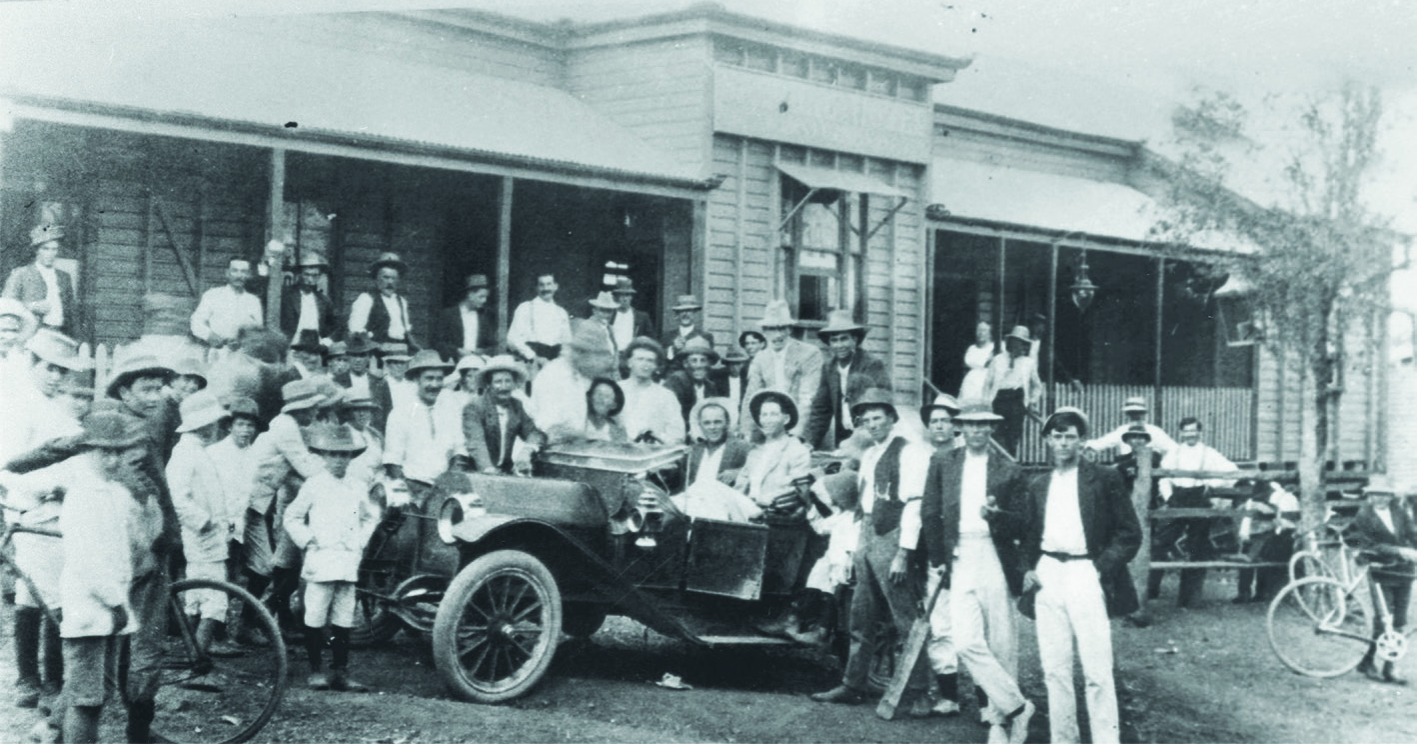
At the beginning of the last century, this area, referred to as Newsome’s Camp, was a buzz of activity as miners came from all over, working in Retreat Creek in search of their fortunes. By 1902, the only secure water supply available to, and maintained by, local miners was from the Miners’ Well on the bank of this creek. Water was collected via a windlass (or winch) and bucket until 1912 when the government erected a windmill and pump. 

In 1903, Kitchener’s Hotel was moved here from Comet, a small town about 100 km away. Along with the Miners Arms, Kitchener’s catered for thirsty workers. Cameron’s butchery was also doing robust business and at one stage the township warranted two bakeries. The area was officially proclaimed as Sapphire Town in 1904 and the Sapphire Provisional School was established in the same year. Open until 1939, it was later disassembled and taken to Anakie, where the materials were used to build the School of Arts Hall.

The aftermath of a huge flood of 1906 saw mining operations draw to a standstill as gemseekers flocked to the bed of Retreat Creek to sieve in the water where large quantities of gems were discovered. “There are from fifty to sixty men and boys working in the water. Some have to almost dive with buckets to scoop up the sand containing the stones,” The Capricornian reported. 

Old timers would argue that the gems weren’t all swept from upstream but from the stockpile waiting to be processed at the Sapphire washplant. Local miners also built sand troughs in the creek for washing their dirt and often flash floods would flush the wash dirt down the creek. Tourists can still find remnant sapphires in Retreat Creek today.

The Miners’ Well was still being maintained in the 1960s. It was said that sheets of tin were placed over the top of the well to keep out dirt and rubble, however the local goats used to enjoy making a racket as they stamped on top!

With the arrival of modern mining methods came private bores and dams and the well was filled in. The windmill was left to battle the elements and gradually deteriorated to such a degree that it blended into the scenery, and sadly, the washplant is no longer here.

On 6th June 1998, five years after lodging an application, the Gemfields Lioness Club was granted permission to restore the windmill as the last remaining historical government construction. The windmill continues to stand proud and tall for current and future generations to ponder the hardships our Gemfields pioneers endured.

  • Before the machinery used today, miners used simple hand tools – a pick, a shovel and a hand sieve to separate the stones. 
  • Some miners sank shafts to locate the gravel layer called wash, which was systematically removed by tunnelling and hoisted in a bucket to the surface. 
  • The washplant is a small powered piece of equipment designed to help process the excavated material in search of gems. Once hoisted to the surface, the excavated material is first washed and spun through fine mesh to remove small rocks and sand. It is next shaken through layers of mesh. Sapphires are heavier than most other rocks so gravity pulls sapphires to the bottom layer. This concentrated bottom layer is then sorted by hand to find the gems.

what3words

Download the what3words app to help you follow the Trail.
Here are the ///what3words identifiers for this location and for the three closest stops:

You are here: ///lays.punctuate.movingly

Where to next?

Boom and Bust – Sapphire///celebrity.muddle.soft

Welcome to Sapphire///totals.treat.condoned

Centenary Stone – Sapphire///sufferings.moats.upstage

Scroll to Top