Boom and Bust – Anakie

the early days

Like most mining operations throughout Australia, the story of the Sapphire Gemfields is one of boom and bust, of good times followed by hard.

1870s – Retreat Creek, where it all began 

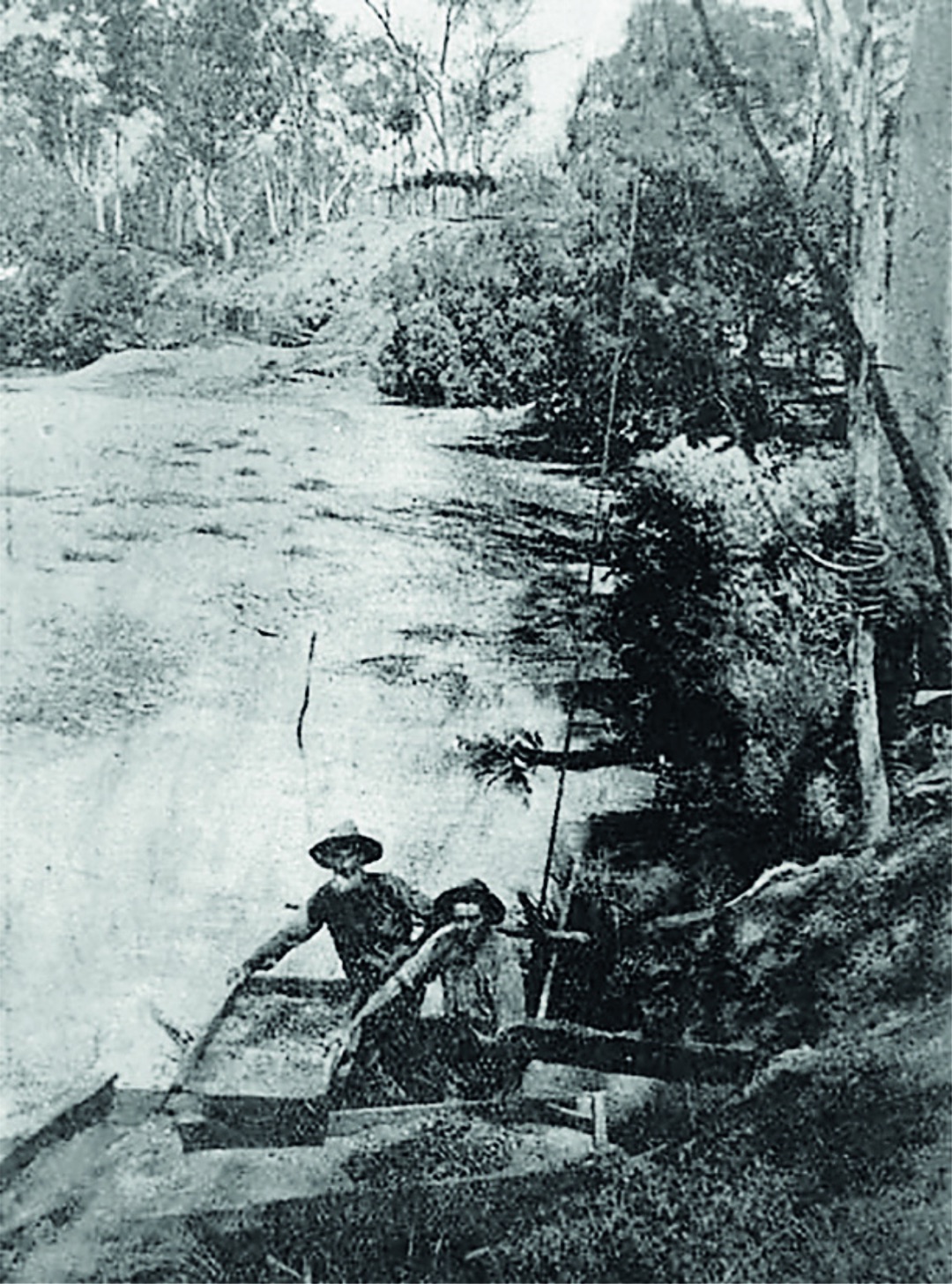
Archibald John Richardson, a surveyor, is recognised as the first to discover sapphires in Retreat Creek while surveying rail extensions. By 1881, Richardson and his partner had employed a team to work the claim he had pegged years earlier when he was still a Government employee. Soon more and more miners were staking claims around Retreat Creek and the landscape was changing. 

Boom… Activity on the fields, prices and production go up 

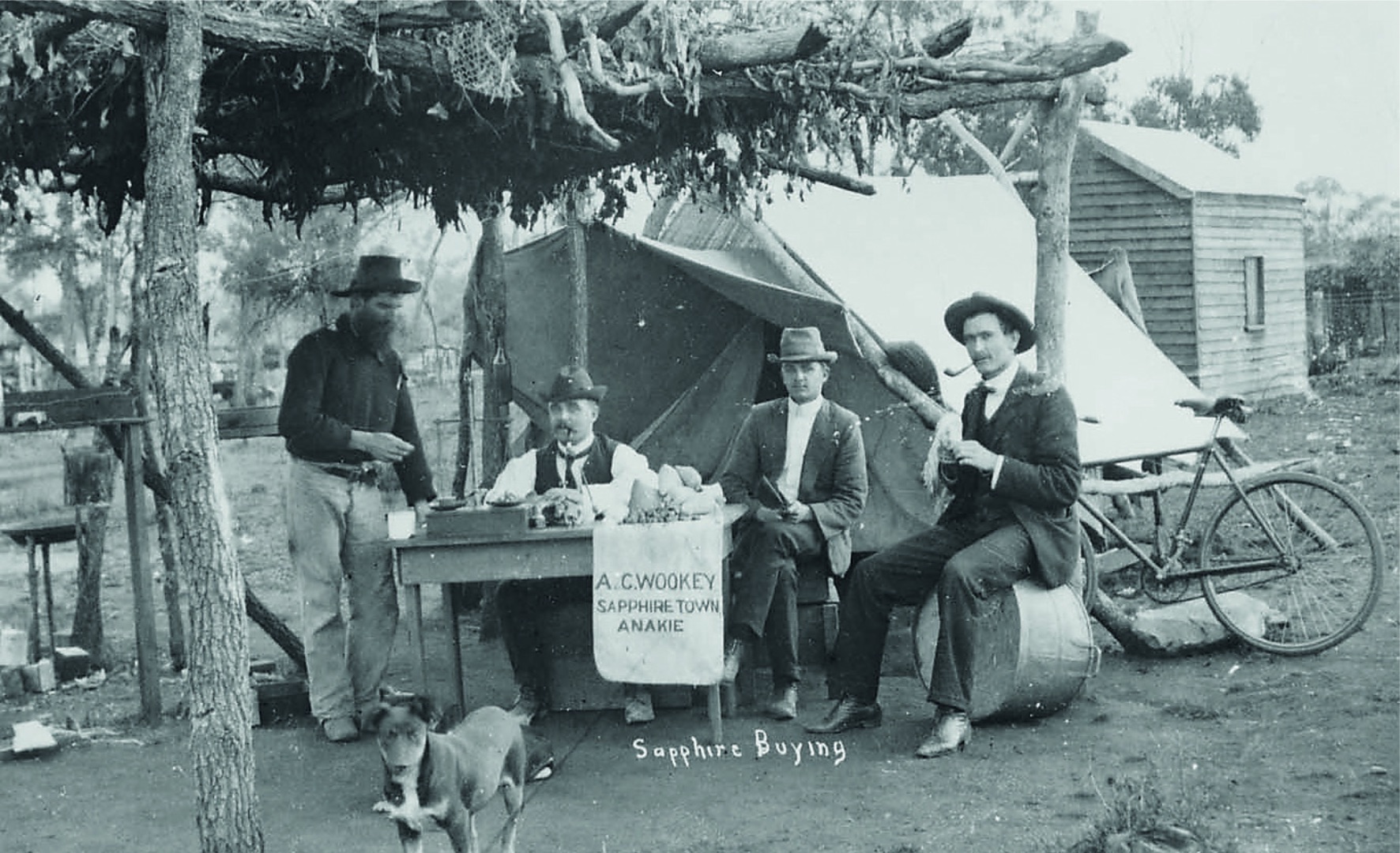
1902 saw the Anakie Sapphire Fields proclaimed a ‘mining area’ when Government geologist, Benjamin Dunstan, reported a “permanent population of about 200 individuals on the fields”. The ‘fields’ referred to Retreat Creek Camp (now Sapphire) and Policeman’s Creek Camp (now Rubyvale). With hotels catering to thirsty miners, washing plants to sort the gemstones, prices and production rising, a railhead at Anakie and a school at Rubyvale, livelihoods and businesses were booming. An influx of miners from the depleted Clermont gold fields meant that by 1910 the Anakie sapphire fields contained a thriving population of over 1,000 miners. 

International demand 

Markets for Australian sapphires opened up with Hatton Garden in England and Idar-Oberstein in Germany. In 1905, first-grade blue sapphire fetched £1 ($2) an ounce – five years later and the price had doubled. By 1907, sapphire production for the area had reached £40,500. 

The German connection 

By the end of the 19th century, there were literally hundreds of cutting houses in Idar-Oberstein and surrounding villages. Gems from all over the world were shipped there to be cut by its famous artisans. Idar-Oberstein is still famous for agate carvings and gem cutting. The industry continues to flourish with dealers importing rough stones from gem markets around the world. 

Bust… Outbreak of war in 1914 

With 1914’s outbreak of the Great War, the Idar-Oberstein market in Germany was lost, and the Russian Revolution of 1918 shattered one of the best markets for deep blue sapphires. However, markets in England and France continued to provide a steady income for the few persevering miners. 

Boom… Markets, government schemes and a royal commission 

After the war, buyers returned to the fields, and 1920 saw another record production equal to $112,900. But this underestimated the large quantities sold on the side. Miners who had worked and hoarded over the years sold their accumulated parcels for very satisfactory prices. 

When a grading and marketing pool failed, a scheme was introduced under the Sugar Acquisition Act, whereby all blue sapphires were compulsorily acquired by the government and sold on behalf of the miner. Disputes resulted in a Royal Commission that recommended the government support be withdrawn. This resulted in a mass exodus of miners seeking employment elsewhere. 

Bust… Onset of the great depression in 1929 

With the onset of the Great Depression, the population of the Sapphire Gemfields dropped dramatically. In 1939, Sapphire School was closed. By 1953, numbers actively involved in mining totalled only 21: 10 at Sapphire, 7 around Rubyvale and 4 at the Willows Gemfields.

Boom… Mechanised mining introduced, 1970s 

The local economy continued in this vein until the introduction of mechanised mining in the 1970s started a new industry boom. To find out more, follow the Geo-Interpretive Trail to Sapphire.

what3words

Download the what3words app to help you follow the Trail.
Here are the ///what3words identifiers for this location and for the three closest stops:

You are here: ///vegan.conjured.footwork

Where to next?

Gemfest – Anakie///outhouse.bloke.grew

Anakie Hotel///charged.landline.connects

Anakie Railway Station///apostrophe.detection.collarbone

Scroll to Top