Black Star of Queensland – Reward

The million dollar doorstop 

A 12-year-old boy, Roy Spencer, is credited with specking the 1,156-carat Black Star of Queensland in the Reward area in 1938. Roy’s father Harry was a gem dealer of international renown, and when a Brisbane gem buyer offered him a ridiculously low price for the black star rough, Harry tossed it carelessly onto the floor, saying, “At that price, I might as well use it as a doorstop!”, triggering the longstanding rumour that the Black Star of Queensland was used as a doorstop.

In 1947, Harry established his place on the world market when the black star caught the attention of Armenian-born jeweller Harry Kazanjian, who travelled from Los Angeles to Queensland to purchase the stone along with others Harry had in his collection.

Kazanjian studied his new purchase for two months before deciding how it would be cut. Star sapphires contain intersecting needlelike inclusions that produce the appearance of a star-shaped pattern (asterism) when cut as a cabochon (polished dome top) and viewed with a single light source.

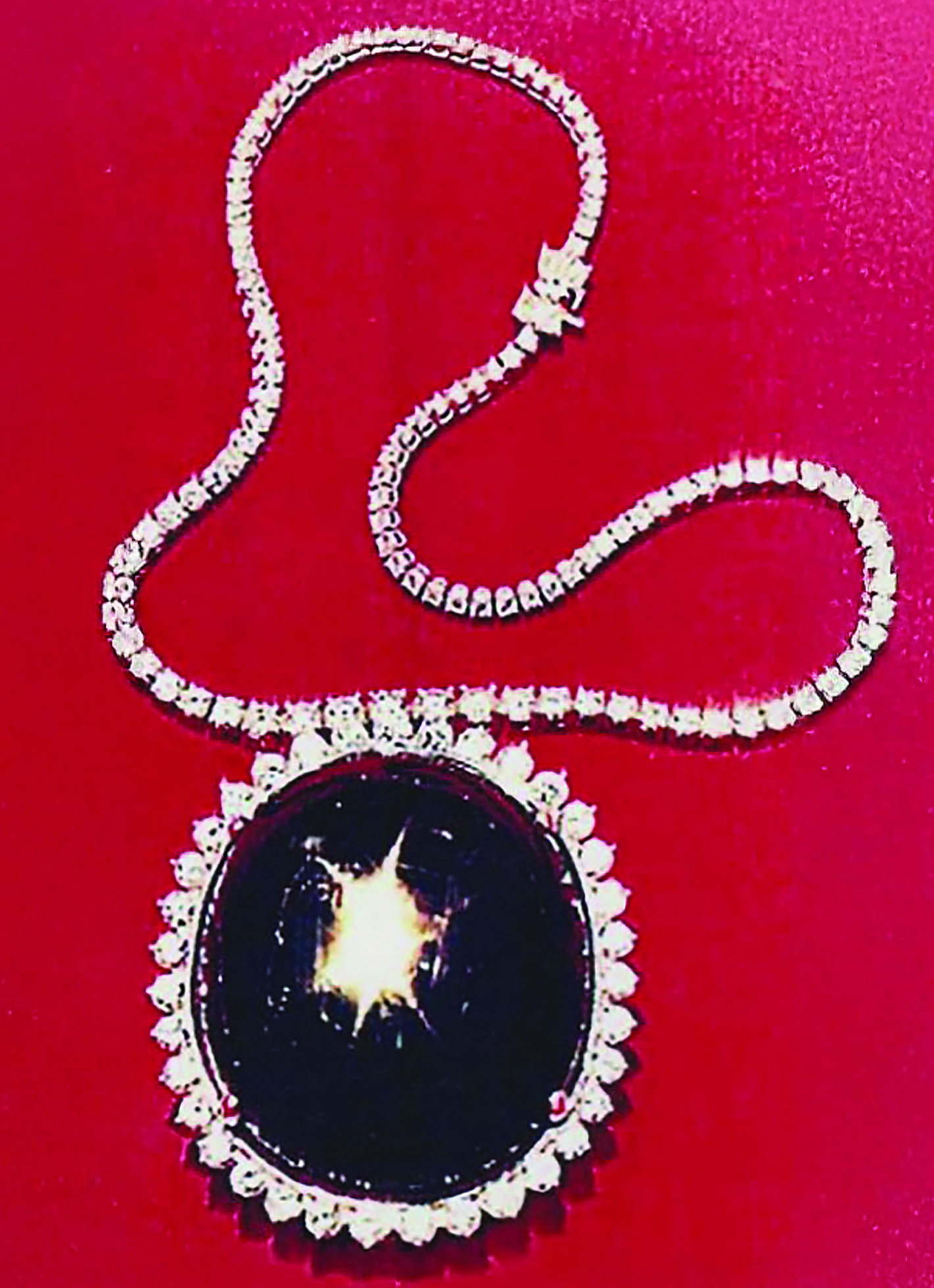
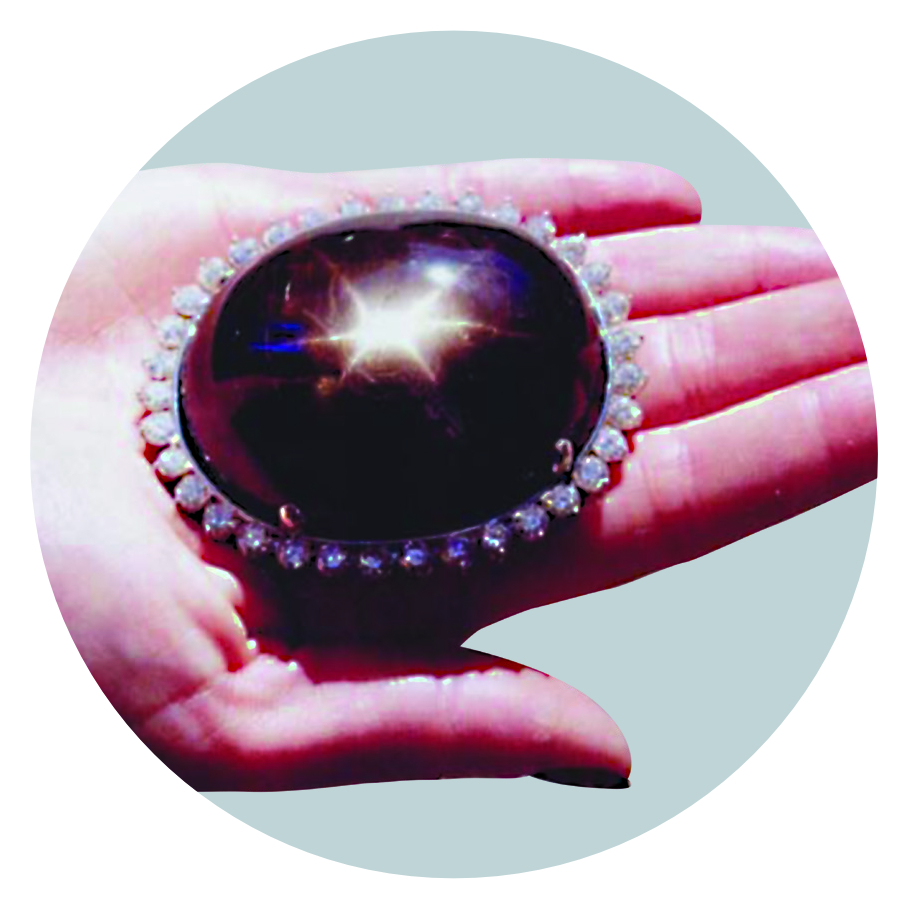
Convinced there was an asterism within the rough stone, Kazanjian cut it as an oval cabochon, losing only 423 carats of material and revealing a 733-carat six-pointed star.

Thousands of pieces of rough star material would need to be examined to find a star sapphire as fine in quality and asterism. Star material is notorious for failing to live up to expectations.

Kazanjian’s investment and cutting expertise paid off. The estimated value of the Black Star was $1 million in 1949. From humble beginnings the Black Star of Queensland is now set majestically as a pendant framed by 35 diamonds. It is valued at approximately $80 million and is considered one of the most famous sapphires in the world.

Pride of Queensland 

As you follow our trail of gems, fortunes found… and lost, you will find that many of these incredible sapphires have had colourful and sometimes mysterious journeys. The beautiful Pride of Queensland is no exception. Reportedly, in 1975, Gordon Beck and Roy McKinney found the 471-carat sapphire in a Reward claim.

Local businessman Alex Strachan bought the stone under contract and travelled to America to have the stone cut and find a buyer. Unfortunately for Beck and McKinney, payments were never completed. Within two years Strachan is said to have declared bankruptcy and the stone had disappeared.

An anonymous tip in 1979 led to a search and police seized a large faceted yellow sapphire on the businessman’s property. 
Though this jewel was never proven to be the original rough stone found by Beck and McKinney, Strachan was bailed out of debt in 1982 and McKinney and Beck were finally paid in full.

To this day, the exact whereabouts of the stunning 169-carat cut yellow is unknown.

what3words

Download the what3words app to help you follow the Trail.
Here are the ///what3words identifiers for this location and for the three closest stops:

You are here: ///guises.storyline.suppression

Where to next?

Welcome to Rubyvale///autopilot.assumes.meadow

Architectural Characters – Reward///competitive.dance.coils

Presidential Busts – Reward///reasons.portraits.minimalist

Scroll to Top